Golden ratio in psychology
Unlocking Its Effects on Perception, Aesthetics, and Human Beauty
2/18/20266 min read
Golden Ratio in psychology
Have you ever wondered why certain faces, artworks, or even natural patterns feel inexplicably captivating? Enter the golden ratio in psychology—a mathematical marvel (approximately 1.618, symbolized as φ or "phi") that's been hailed as the secret to beauty and harmony for centuries. Often called the "divine proportion," this ratio appears in everything from the spirals of galaxies to the proportions of the human body, sparking debates on whether it truly influences our subconscious perceptions of attractiveness and balance.
In numerical psychology, the golden ratio isn't just math; it's a bridge between numbers, consciousness, and aesthetic appeal. It ties into how our brains process visual information, evoking feelings of pleasure and symmetry. But is it science or myth? This guide dives deep into the psychological effects of the golden ratio, backed by studies, real-world examples, and practical tips. Whether you're exploring golden ratio psychology for personal growth or design inspiration, you'll discover its intriguing role in shaping human behavior and preferences.
For more on mystical numbers, check out our article on [The Magic Behind 0618: Unlocking the Golden Ratio's Secrets in Psychology and Finance](https://numericalpsychology.com/the-magic-behind-0618-unlocking-the-golden-ratios-secrets-in-psychology-and-finance).
## What Is the Golden Ratio? A Quick Mathematical and Historical Overview
The golden ratio emerges when a line is divided into two parts where the longer segment (a) divided by the shorter (b) equals the whole (a + b) divided by a—resulting in φ ≈ 1.618. It's closely linked to the Fibonacci sequence (1, 1, 2, 3, 5, 8...), where ratios of successive numbers approach φ.
Discovered by ancient Greeks like Euclid and later popularized by Leonardo da Vinci in his Vitruvian Man, the ratio has fascinated thinkers for millennia. In nature, it manifests in nautilus shells, pinecones, and flower petals—patterns that optimize growth and efficiency. But its leap into psychology began in the 19th century with pioneers like Gustav Fechner, who tested whether humans innately prefer golden ratio proportions in shapes like rectangles.
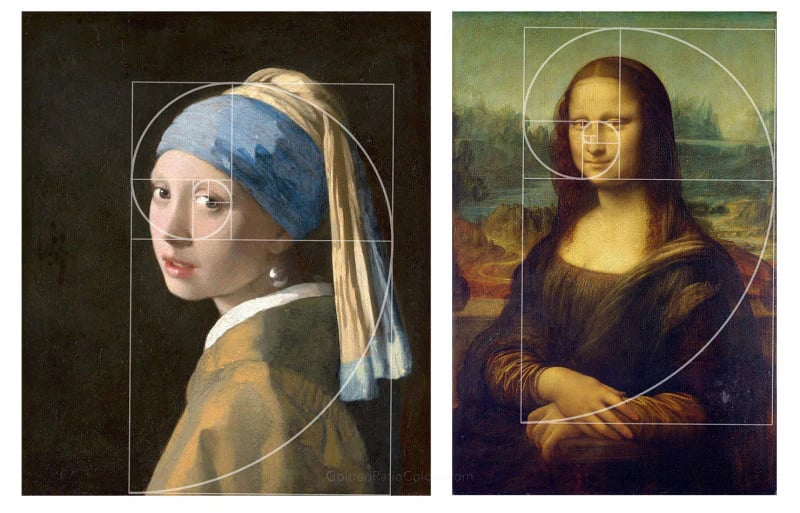
Imagine staring at the Mona Lisa: Her enigmatic smile isn't just artistry; overlays show her features aligning with golden spirals, drawing your eye subconsciously. This isn't coincidence—it's how the ratio creates visual flow, making compositions feel "right."
## The Historical Roots of the Golden Ratio in Psychological Research
The intrigue started with Fechner's 1865 experiments, where participants preferred rectangles with a 1.618 ratio (the "golden rectangle") over others, with peaks at 76% in some trials. He even measured thousands of real-world objects like books and windows, finding averages close to φ.
Fast-forward to the 20th century: Psychologists like Chris McManus (1980) confirmed "moderately good evidence" for Fechner's findings, while others like Michael Godkewitsch (1974) argued preferences were artifacts of presentation order. A 1995 review by Christopher Green concluded there are "real psychological effects associated with the golden section," but they're sensitive to methodology—highlighting the blend of innate appeal and experimental bias.
In modern times, evolutionary psychologists link it to survival: Symmetrical, balanced forms signal health and vitality, much like how we perceive facial attractiveness. For Vedic ties, explore [Methane Gas Bubbles in Frozen Lakes: A Mystical Connection to Vedic Numerology and the Golden Ratio](https://numericalpsychology.com/methane-gas-bubbles-in-frozen-lakes-a-mystical-connection-to-vedic-numerology-and-the-golden-ratio).
## Scientific Studies: Evidence for the Psychological Effects of the Golden Ratio
Does the golden ratio in psychology hold up under scrutiny? Mixed but fascinating results suggest yes—with caveats.
- Perception and Aesthetics: A 2022 study (published in Perception and Cognition) used eye-tracking to show participants fixated longer and rated stimuli higher when proportions neared φ. Brain imaging revealed activation in reward centers like the anterior insula, indicating emotional pleasure from "harmonious" visuals.
- Facial Attractiveness: Research from 2024 (ResearchGate PDF) analyzed psychological experiments where faces designed with golden ratios were rated more attractive. Participants associated these proportions with positivity in implicit tests, supporting subconscious bias toward φ-aligned features.
- Beyond Faces: In product design (2017 study), items with golden layouts scored higher in usability and appeal, per the aesthetic-usability effect—users perceive balanced designs as more functional. A high school experiment (JSR.org) tested photo compositions: While overall preferences were slight, the "golden layout" consistently outperformed non-golden ones.
- Ecological and Kinetic Views: A 2024 review emphasized how the ratio mimics natural affordances (e.g., gravity models in movement), making it easier for the brain to process—leading to quicker beauty judgments.
However, a 2024 PMC article debunks strong claims: "No convincing evidence" links it to idealized human beauty, attributing preferences to cultural myths or nearby ratios (1.5-1.75). Green (1995) echoed this: Effects exist but are "relatively sensitive to careless methodological practices."
In numerical psychology, these findings align with how patterns influence decision-making—see [The Role of Numerical Patterns in Decision-Making Processes](https://numericalpsychology.com/the-role-of-numerical-patterns-in-decision-making-processes).
## Psychological Effects: How the Golden Ratio Influences Perception and Beauty
Why does 1.618 feel "golden"? Psychologically, it creates fluency—our brains process balanced stimuli faster, triggering dopamine releases akin to viewing art or nature.
- On Beauty Perception: Studies show φ proportions evoke tolerance and broad-mindedness, mirroring number 9's compassionate energy in numerology. In faces, closer alignments correlate with higher attractiveness ratings, potentially due to evolutionary cues for symmetry and health.
- Cognitive and Emotional Impact: Easier processing reduces cognitive load, leading to positive emotions. In therapy, golden ratio visuals aid relaxation in mindfulness apps, enhancing focus and reducing anxiety.
- Real-World Anecdotes: Architects like Le Corbusier used φ for harmonious buildings, evoking calm. In marketing, logos (e.g., Apple's bite) subtly incorporate it, boosting brand appeal subconsciously.
Imagine hiking through a forest: The branching trees follow Fibonacci patterns, creating a serene "flow" that calms the mind—nature's psychological therapy.
## Applications of the Golden Ratio in Design, Therapy, and Daily Life
Beyond theory, the golden ratio in psychology has practical uses:
- Graphic Design and UX: Websites with φ grids (e.g., Twitter's old layout) improve user engagement by guiding eyes naturally.
- Therapeutic Tools: In art therapy, drawing golden spirals helps process emotions, fostering creativity and balance.
- Personal Development: Journal using φ proportions to organize thoughts—longer sections for reflections, shorter for actions—to enhance clarity.
- Fitness and Wellness: Some gait training uses φ for efficient movement, reducing injury risk in rehab.
For sports optimization, link to [Numerology in Sports Performance Optimization](https://numericalpsychology.com/numerology-in-sports-performance-optimization-unlocking-the-secrets-of-success).
## Criticisms and Debates: Is the Golden Ratio a Myth in Psychology?
Not everyone buys the hype. Critics argue preferences stem from confirmation bias—e.g., forcing φ onto the Parthenon ignores deviations. A 2024 kinetic review notes while symmetry aids beauty perception, GR's role is overstated, influenced by cultural exposure rather than innate wiring.
Yet, even skeptics acknowledge subtle effects: As Green (1995) put it, "All that glitters" may not be gold, but the ratio's allure persists in human cognition.
## How to Harness the Golden Ratio for Personal Growth and Creativity
Ready to apply golden ratio psychology? Start simple:
1. Visualize Daily: Meditate on spirals to align thoughts.
2. Design Your Space: Arrange furniture in φ ratios for harmony.
3. Creative Projects: Use tools like Photoshop's golden spiral overlay.
4. Reflect: Track how balanced environments affect your mood.
Combine with dream analysis for deeper insights: [Unlocking the Secrets of the Subconscious: A Comprehensive Guide to Dream Analysis](https://numericalpsychology.com/unlocking-the-secrets-of-the-subconscious-a-comprehensive-guide-to-dream-analysis).
## Golden Ratio in Psychology FAQ: Answering Your Top Questions
### What Is the Golden Ratio in Psychology?
It's the study of how 1.618 proportions influence perception, aesthetics, and beauty judgments, often linked to subconscious preferences for harmony.
### Does the Golden Ratio Really Affect Beauty Perception?
Studies show mixed results: Some find higher attractiveness ratings for φ-aligned faces, but others call it a myth due to methodological issues.
### How Does the Golden Ratio Appear in Nature and Art?
In nature: Sunflowers, shells; in art: Mona Lisa's composition. These patterns create visual flow, evoking psychological calm.
### Is There Scientific Evidence for the Golden Ratio's Psychological Effects?
Yes, but subtle—eye-tracking and brain scans show faster processing and pleasure responses, per reviews like Green (1995).
### Can the Golden Ratio Improve Mental Health?
Indirectly: Balanced designs reduce stress; in therapy, it aids focus and creativity.
### What's the Difference Between Golden Ratio and Fibonacci Sequence?
Fibonacci approximates the ratio; both represent growth patterns influencing psychological appeal.
### Why Is the Golden Ratio Called 'Divine' in Psychology?
It symbolizes universal harmony, bridging math and mind—evoking spiritual enlightenment in numerical psychology.
### How Can I Use the Golden Ratio in Daily Life?
In design, photography, or journaling for better balance and decision-making.
### Is the Golden Ratio a Myth?
Partially—strong claims lack evidence, but real, sensitive effects exist in aesthetics.
### Where Can I Learn More About Numerical Patterns in Psychology?
Explore [Numerical Psychology Examples: Understanding Patterns in Human Behavior](https://numericalpsychology.com/numerical-psychology-examples-understanding-patterns-in-human-behavior) on our site.
## Final Thoughts: Embrace the Golden Harmony in Your Mind
The golden ratio in psychology captivates because it mirrors life's perfect imperfections—subtle, debated, yet undeniably influential on how we see beauty and balance. Whether enhancing your creativity or decoding subconscious patterns, φ invites a deeper appreciation of the world's hidden symmetries.
Dive further at numericalpsychology.com—calculate your soul number or join our courses for personalized insights. What's your take on the golden ratio? Share below!
Related reads:
- [Pythagoreanism: The Mystical Union of Numbers, Philosophy, and the Cosmos](https://numericalpsychology.com/pythagoreanism-the-mystical-union-of-numbers-philosophy-and-the-cosmos)
- [The Science Behind Numerical Patterns in Human Behavior](https://numericalpsychology.com/the-science-behind-numerical-patterns-in-human-behavior)