
Number 9
Throughout history, numbers have carried meanings far beyond simple counting. Among them, the number 9 stands out as one of the most sacred, mysterious, and psychologically powerful symbols across ancient civilizations. From Egypt and Greece to China, India, and Mesoamerica, 9 was seen as the number of completion, divine intelligence, and cosmic order.
2/7/20262 min read
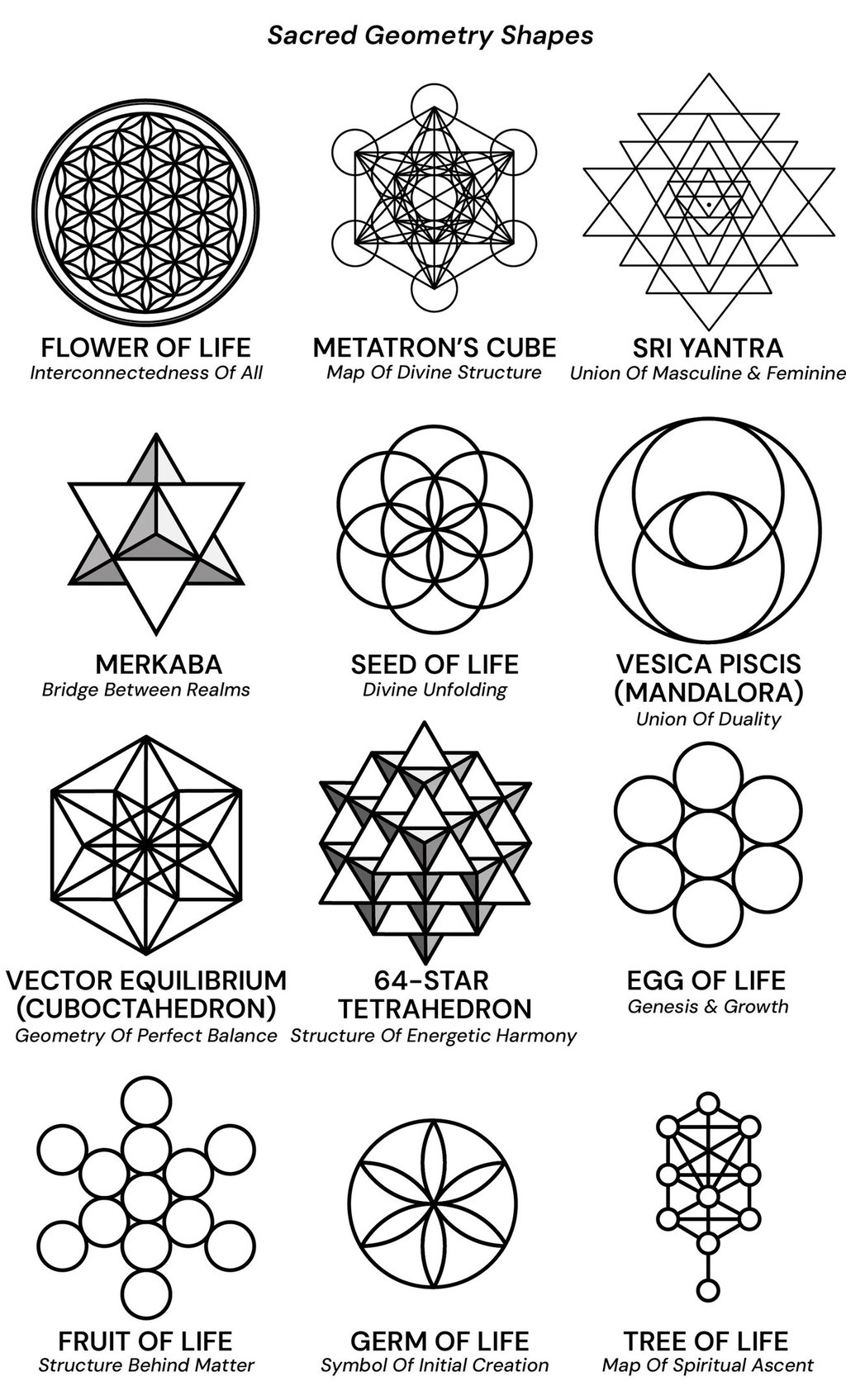
In numerical psychology, 9 represents the bridge between the material and the spiritual — the final stage before transformation begins again.
Let’s explore how ancient cultures understood and honored this remarkable number.
🌟 Why 9 Is Psychologically Powerful
Mathematically, 9 is the last single-digit number, symbolizing closure, mastery, and fulfillment. Interestingly, any number multiplied by 9 eventually reduces back to 9 in digital roots (e.g., 9×7=63 → 6+3=9), which made ancient scholars view it as self-returning and eternal.
Psychologically, this gave 9 associations with:
Wisdom
Compassion
Universal consciousness
Humanitarian purpose
Spiritual maturity
Ancient thinkers believed that those aligned with 9 carried insight meant for the collective rather than the ego.
🏺 Ancient Egypt: The Ennead of Creation
In Egyptian cosmology, 9 appeared as the Great Ennead of Heliopolis — a group of nine primordial gods responsible for creation:
Atum, Shu, Tefnut, Geb, Nut, Osiris, Isis, Set, and Nephthys.
These nine forces structured the universe itself. The Egyptians saw 9 as the number of cosmic completeness — the full cycle of divine manifestation. Temples and rituals often reflected groupings of nine, reinforcing its link to order, rebirth, and divine law.
For Egyptian psychology, 9 represented the soul’s journey toward harmony with the gods.
🏛 Ancient Greece: Perfection and the Muses
The Greeks also revered 9 as sacred through the Nine Muses, daughters of Zeus, who governed art, science, memory, and inspiration.
Each Muse symbolized a domain of human consciousness:
Poetry
Music
History
Dance
Astronomy
Learning
To the Greeks, 9 meant mental and creative perfection. Pythagoras taught that 9 symbolized the horizon of human understanding — the final stage before truth renews itself.
In numerical psychology, Greek philosophy framed 9 as the number of genius and higher intellect.
🐉 Ancient China: Imperial Power and Heaven
In Chinese civilization, 9 was associated with the Emperor and the heavens. It was considered the most yang (masculine, active, cosmic) number.
Examples include:
The Forbidden City having 9,999 rooms in myth.
Dragons depicted with 9 forms.
Imperial robes decorated with 9 symbolic elements.
Here, 9 symbolized authority, destiny, and divine protection. Psychologically, it reflected leadership rooted in cosmic responsibility rather than personal ambition.
🕉 India: Spiritual Completion
In Hindu and Vedic traditions, 9 is deeply spiritual:
There are 9 planets (Navagraha) influencing destiny.
Navaratri, the nine-night festival, celebrates divine feminine power.
Human life is said to pass through 9 forms of devotion (Bhakti).
Indian philosophy connects 9 with karma completion and soul evolution. It marks the stage where the self dissolves into universal awareness.
From a numerical psychology perspective, 9 reflects detachment from ego and service to higher truth.
🗿 The Maya: Time and Consciousness
The Maya linked 9 with time cycles and the underworld (Xibalba), which had nine levels. Their pyramids and calendars often encoded this structure.
Rather than fear, the Maya viewed these nine stages as levels of consciousness transformation — descent before rebirth.
Psychologically, this presents 9 as the number of inner initiation, where the human mind confronts limitation before awakening.
🧠 The Psychological Meaning of 9 Today
Across cultures, a pattern emerges:
9 always points toward completion, compassion, and transcendence.
In modern numerical psychology, people influenced by 9 tend to be:
Empathetic
Visionary
Artistic
Philosophical
Humanitarian
They are often drawn to healing, teaching, leadership, and creativity. The challenge of 9 is learning when to release — because its power comes not from control, but from understanding cycles.