
Numerology in ancient civilizations
The link between numerology and ancient civilizations reveals a profound human fascination with numbers that spans millennia. Far from a modern new-age invention, numerology—as the mystical interpretation of numbers and their influence on life, destiny, and the cosmos—emerged from the intellectual and spiritual pursuits of some of the world's earliest advanced societies. Ancient peoples viewed numbers not merely as tools for counting but as divine keys to understanding universal order, cosmic harmony, and human fate.
2/7/20263 min read
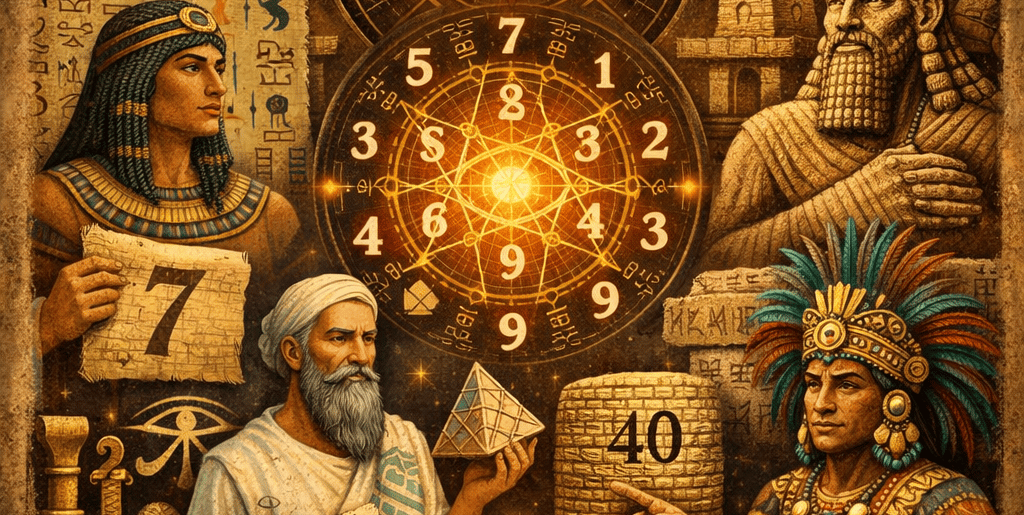
Roots in Mesopotamia: The Cradle of Number Mysticism
The story begins in ancient Mesopotamia, particularly among the Babylonians and the Chaldeans (a related group prominent around the 9th–6th centuries BCE in what is now Iraq). Here, one of the earliest documented uses of numerical symbolism appears. Babylonian scholars developed sophisticated astrology intertwined with numbers, assigning mystical significance to celestial movements and patterns. A striking example comes from the 8th century BCE Assyrian king Sargon II, who built the wall of his capital Khorsabad to a length of 16,283 cubits—deliberately matching the numerical value of his name through a form of gematria (assigning numbers to letters or names for interpretive purposes).
The Chaldeans, renowned astronomers and astrologers, refined these ideas into what we now call Chaldean numerology. This system linked numbers to vibrational energies, sounds, and cosmic forces, often avoiding the number 9 in letter assignments due to its sacred status. These practices influenced divination, royal decisions, and even architecture, showing how numbers were seen as conduits between the earthly and divine realms.
Ancient Egypt: Numbers in Sacred Geometry and Ritual
Parallel developments unfolded in ancient Egypt, where numerology intertwined with religion, architecture, and mysticism. Egyptians attributed magical properties to numbers, using them in rituals, temple designs, and pyramid construction. Numbers symbolized cosmic principles—the alignment of structures often reflected numerical harmony believed to invoke divine favor or eternal stability.
Egyptian beliefs influenced later thinkers, including Greek scholars who traveled there for knowledge. The culture's emphasis on sacred geometry (proportions and ratios embodying spiritual truths) laid groundwork for viewing numbers as expressions of eternal order.
Pythagoras and the Greek Synthesis
While roots trace to Mesopotamia and Egypt, the figure most associated with systematizing numerology is the Greek philosopher Pythagoras (c. 570–495 BCE). After extensive travels—including to Egypt, Babylon, and possibly other regions—Pythagoras founded a mystical school where numbers were revered as the essence of reality. He taught that "all is number," positing that the universe operated through mathematical harmony and that numbers carried intrinsic mystical qualities.
In the Pythagorean system:
1 symbolized unity and the origin of all things.
2 represented duality (female principle), 3 the male, with their union (5) signifying marriage.
Even numbers were female, odd male; 4 stood for justice.
10 was the most perfect number, embodying completeness (1+2+3+4) and linking to spatial dimensions.
Pythagoras and his followers used numerology for divination, personality analysis, and even altering destiny through name changes. His ideas profoundly shaped Western philosophy, influencing Plato and later Neoplatonists, and blending mathematics with metaphysics in ways still echoed today.
Echoes in Other Ancient Traditions
Numerology's threads extend beyond the Mediterranean. In ancient China, numerical symbolism appeared in the I Ching (Book of Changes) and feng shui, where numbers guided harmony with cosmic forces. India incorporated similar concepts in Vedic traditions, linking numbers to astrology, karma, and spiritual cycles. Even the Maya civilization in Mesoamerica developed intricate numerical systems tied to calendars, cosmology, and divine cycles, reflecting a universal human tendency to find meaning in patterns.
Across these cultures, numbers served practical (mathematics, astronomy) and esoteric purposes (divination, spiritual insight). They bridged the material and mystical worlds.
Why This Connection Matters Today
The link between numerology and ancient civilizations reminds us that our modern interest in numbers—whether through life path calculations, name vibrations, or personal year forecasts—stems from deep historical roots. These early societies recognized patterns in the universe long before modern science formalized them, using numbers to navigate existence, predict events, and seek harmony.
At numericalpsychology.com, we explore how these timeless principles apply to contemporary life, blending ancient wisdom with psychological insight. Numbers have always whispered secrets—ancient civilizations simply listened first.
By understanding this heritage, we gain appreciation for numerology not as superstition but as an enduring human endeavor to decode the cosmos through its most fundamental language: number.