
The Science of Olfactory Memory
Replicating and Measuring Grandmother's House
2/8/20266 min read
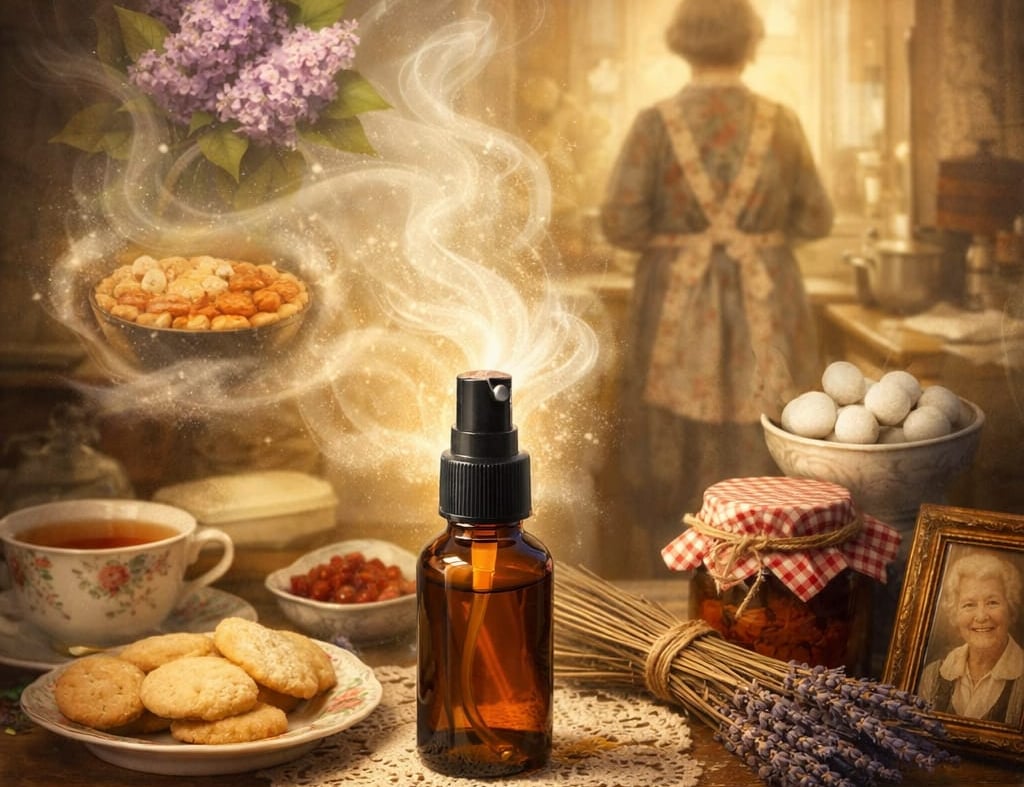
Scent is the most powerful trigger of memory and emotion—more visceral than sight or sound. A single fragrance can transport us decades into the past, unlocking vivid recollections of places, people, and moments we thought were forgotten. But can these deeply personal scents be measured, analyzed, and recreated? The answer reveals a fascinating intersection of chemistry, neuroscience, and psychology.
### The Proust Effect: Why Scent Holds Memory
The phenomenon of scent-triggered memory, often called the Proust Effect after Marcel Proust's famous madeleine passage, is rooted in neuroanatomy. Unlike other senses, olfactory information bypasses the thalamus and connects directly to the limbic system—the emotional center of the brain. This explains why a grandmother's perfume or the smell of her kitchen can evoke emotions with startling intensity.
When we attempt to replicate a scent from memory, we're not just recreating molecules—we're attempting to reconstruct an entire emotional and psychological experience encoded in our neural pathways.
### Measuring the Invisible: Scientific Approaches to Scent Analysis
The challenge of capturing a scent begins with understanding its chemical composition. Every smell is a complex mixture of volatile organic compounds (VOCs) released into the air. Modern science offers several approaches to identifying and measuring these compounds:
Gas Chromatography-Mass Spectrometry (GC-MS) remains the gold standard for scent analysis. This technique separates individual chemical compounds and identifies their molecular structure with remarkable precision. A single scent—like that of a grandmother's house—might contain hundreds of distinct compounds, from natural wood terpenes to synthetic cleaning agents to the aldehydes of aging paper.
Electronic Nose Technology represents a more accessible approach. These devices use arrays of chemical sensors to create "scent fingerprints"—patterns of response that can be compared and analyzed. While not as precise as GC-MS, electronic noses can detect and differentiate between complex scent profiles, making them valuable for comparative analysis.
Air Quality Sampling provides another layer of information. Portable air sampling devices can collect VOCs over time, capturing the ambient chemical environment of a space. These samples can then be analyzed in laboratories to create a comprehensive chemical profile.
### The Questionnaire Method: Capturing Subjective Experience
While chemical analysis reveals what is objectively present, it cannot capture the subjective meaning of a scent. This is where structured questionnaires become essential tools in olfactory research.
Effective scent questionnaires should explore multiple dimensions:
Descriptive Categories guide respondents toward specific scent families—woody, floral, musty, sweet, citrus, spicy, or chemical. Rather than asking "what does it smell like," provide reference points: "Does it remind you of vanilla, lavender, cinnamon, or old books?"
Intensity Mapping helps quantify subjective experience. Rating scales allow respondents to indicate how strong, subtle, pleasant, or overpowering various scent components feel.
Temporal Patterns matter deeply. Was the scent constant or did it change by season, time of day, or room? Morning coffee, afternoon sunshine on wood floors, evening cooking—these create layered olfactory experiences.
Emotional Associations must be documented. What feelings does the scent evoke? Comfort, nostalgia, safety, warmth? These psychological connections often reveal which scent components are most important to preserve.
Material Documentation provides crucial context. What physical objects were present? Specific wood types, fabrics, cleaning products, foods, flowers, or perfumes all contribute distinct chemical signatures.
### The Architecture of Scent: Understanding Layered Complexity
A grandmother's house doesn't have a single scent—it has an olfactory architecture built over decades. Understanding this structure is essential for authentic replication.
Base Notes form the foundation—the permanent scent signatures of the space itself. Old wood releases terpenes and lignin breakdown products. Aged textiles accumulate dust, skin oils, and absorbed fragrances. Books release vanillin as paper degrades. These base notes are typically subtle but persistent.
Middle Notes come from semi-permanent elements—furniture polish, soap residues, potpourri, cooking oils absorbed into surfaces. These scents are stronger than base notes and create the characteristic "home smell" that differs from house to house.
Top Notes are the most volatile and noticeable—fresh flowers, cleaning products, perfume, food preparation. While transient, these often form the most vivid memories because they were strongest at the time of encoding.
### The Replication Process: From Analysis to Recreation
Creating an authentic scent replica requires methodical reconstruction of this layered architecture.
Phase One: Documentation and Analysis begins with gathering as much information as possible. If the physical space still exists, conduct on-site air sampling. Interview family members using structured questionnaires. Photograph the environment, noting materials, finishes, and objects. Research historical context—what products were commonly used in that era?
Phase Two: Component Identification involves analyzing collected data to create a target scent profile. This might include:
- Specific wood species and their characteristic terpene profiles
- Era-appropriate cleaning products and their chemical signatures
- Cooking residues from frequently prepared foods
- Fabric treatments and detergents from that time period
- Cosmetics or perfumes regularly used
Phase Three: Formulation requires sourcing or synthesizing the identified compounds. This might involve:
- Essential oils for natural woody, floral, or spicy notes
- Aroma chemicals to recreate specific synthetic compounds
- Authentic period products when available
- Custom blending to match the target profile
Phase Four: Environmental Integration recognizes that scent exists in context. The most authentic recreations don't just rely on diffusers or candles, but incorporate scent-bearing objects:
- Appropriate wood types in furniture or architectural elements
- Period-correct textiles that absorb and release scent
- Vintage books or papers
- Similar environmental conditions (temperature, humidity, air circulation)
### Full Immersion: Creating Multi-Sensory Memory Spaces
The concept of "full dive" scent replication—creating a completely immersive olfactory environment—extends beyond chemistry into environmental psychology.
Spatial Design matters profoundly. Scent behaves differently in different spaces. A large, airy room with hardwood floors and high ceilings creates different scent dynamics than a small, carpeted room with heavy drapes. Matching the spatial characteristics of the original environment enhances authenticity.
Delivery Methods should be varied and naturalistic. Rather than a single strong scent source, layer multiple subtle sources:
- Scented fabrics (curtains, upholstery, rugs)
- Wood treatments or natural wood that releases scent
- Discreet diffusers for volatile components
- Scented objects placed naturally (books, sachets, decorative items)
Temporal Variation adds realism. No home smells exactly the same at all times. Consider programming scent variations for different times of day or seasons if the goal is ongoing immersion.
Complementary Sensory Elements amplify the psychological effect. Appropriate lighting, sounds, textures, and even temperature contribute to the feeling of being "there." Memory is multisensory, and engaging multiple senses simultaneously creates more powerful recall.
### The Limits and Possibilities
Perfect replication of a scent memory faces inherent limitations. Our memories themselves are reconstructive and change over time. What we remember may differ from what objectively existed. Additionally, our own olfactory systems change with age—we don't smell things the same way at 40 as we did at 10.
Yet the process itself holds value beyond perfect accuracy. Engaging deeply with scent memories—documenting them, analyzing them, attempting to recreate them—serves as an act of preservation and honoring. The effort to capture something as ephemeral as grandmother's house scent acknowledges the profound importance of these sensory experiences in shaping who we are.
### Practical Applications Beyond Nostalgia
The science of scent replication extends beyond personal memory projects. These techniques find applications in:
Therapeutic Settings where familiar scents can comfort patients with dementia or anxiety disorders.
Historical Preservation where museums recreate the olfactory environment of historical periods to enhance visitor experience.
Product Development where brands attempt to evoke specific emotional responses through carefully engineered scent profiles.
Environmental Psychology Research exploring how scent influences mood, behavior, and cognitive performance.
### The Future of Olfactory Technology
Emerging technologies promise to make scent analysis and replication more accessible. Miniaturized electronic noses, smartphone-connected scent sensors, and AI-powered scent databases are moving from research laboratories into consumer products. We may soon live in a world where documenting and recreating scent memories becomes as simple as taking a photograph.
Yet technology alone cannot capture the full meaning of a scent memory. The grandmother's house scent is not just chemistry—it's the accumulation of years, the presence of loved ones, the safety of childhood. What we're really trying to preserve is not molecules but meaning.
### Conclusion: The Mathematics of Memory
In numerical psychology, we understand that everything has a pattern, a code, a structure that can be analyzed and understood. Scent is no different. Behind every fragrance lies a complex numerical relationship—concentrations of compounds, ratios of notes, frequencies of molecules vibrating in specific patterns.
But like the numbers in a birth date that reveal psychological insights beyond mere digits, a scent profile is more than its chemical formula. It's a numerical code that, when properly decoded and reconstructed, can unlock entire worlds of memory and emotion.
The journey to replicate grandmother's house is ultimately a journey of preservation—not just of molecules, but of moments. In learning to measure and recreate these scents, we honor the profound impact of sensory experience on human psychology and the deep connections that bind us to places and people across time.